
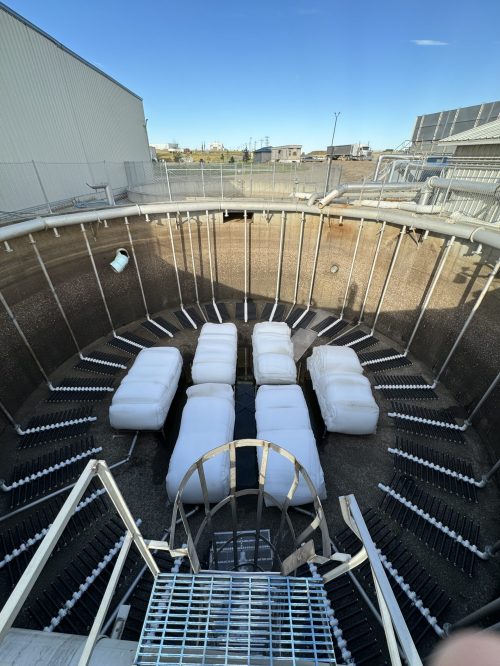
View of the aeration basin with WavTex modules during installation
Malting plants produce malt, a critical part of the brewing and distilling processes. One such malting plant located in Montana is strategically placed in one of North America’s most productive barley-growing regions. The plant processes barley into high-quality malt for distribution to some of the best breweries and distillers in the world.
Malting is a water-intensive process, particularly during the steeping stage of barley preparation. As a result, the facility generates high-strength, organic wastewater with elevated soluble biochemical oxygen demand (sBOD₅). Wastewater generated during the malting process – including barley washing, steeping, and sanitation streams – is routed to a common mixing tank before treatment. From there, the combined flow passes through a rotary drum screen for removal of larger solids and then flows by gravity to the aeration basin. After biological treatment, solids are further separated by a dissolved air flotation system (DAF) before conveying treated effluent to the local municipal treatment system via a private service line.
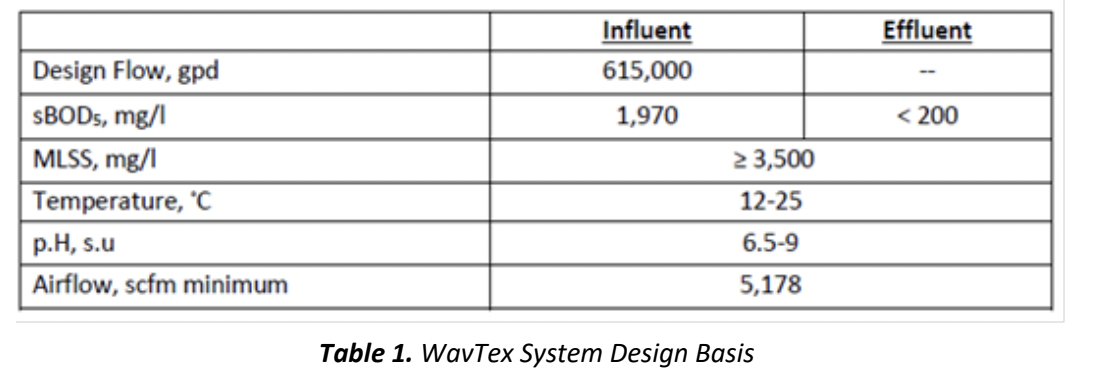
Prior to the upgrade, the average BOD concentration entering the DAF unit was approximately 2,000 mg/L, and air was supplied to the treatment tank via a floor-mounted coarse bubble aeration system. To meet local discharge requirements, the malting plant sought to reduce the average BOD concentration of its wastewater to below the municipal surcharge threshold of 200 mg/L prior to discharge to the city system. The design basis considered the following data:
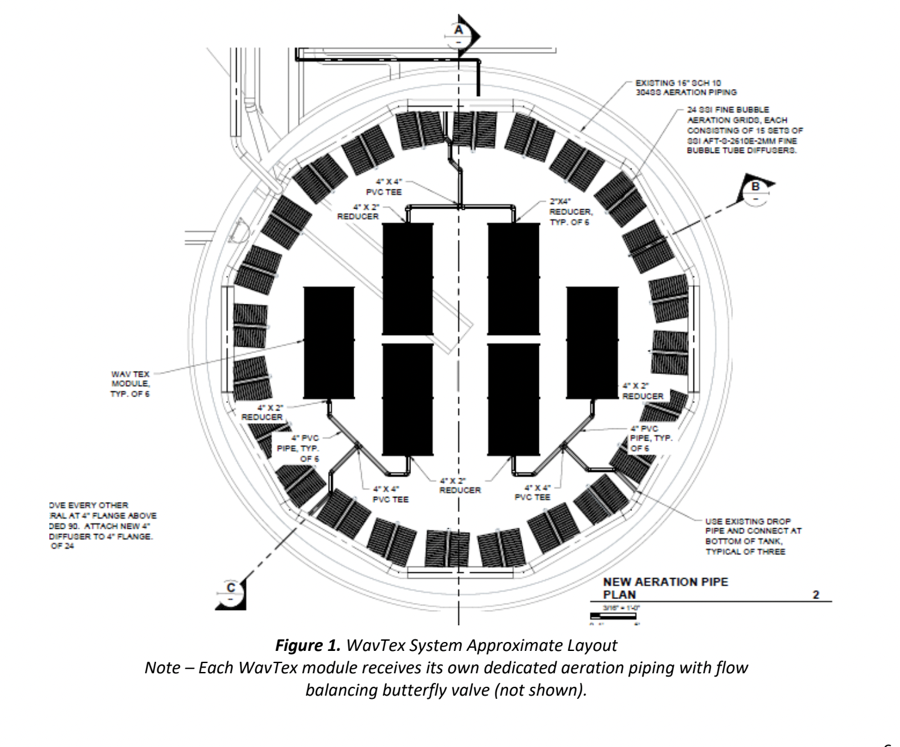
To enhance biological treatment and support BOD reduction, a WavTex ™ Integrated Fixed-Film Activated Sludge (IFAS) system was installed in the existing tank in September 2024. Six WavTex modules featuring buoyant EnTextile media sheets and integral coarse-bubble aeration for scour were installed. In addition, the existing floor-mounted coarse bubble aeration system was replaced with a new fine bubble aeration system for enhanced oxygen transfer efficiencies in the basin, supporting the more intensive BOD removal requirements. By adding attached-growth treatment capacity within the existing tank volume, the IFAS system increases the total active biomass available for BOD removal while maintaining the facility’s present treatment configuration.
Since installation, the system has achieved its intended objective of increasing the plant’s biological treatment capacity and reducing BOD concentrations prior to the DAF process. This project demonstrates how IFAS technology can be integrated into current industrial wastewater systems to enhance biological performance without requiring major expansion of treatment facilities. The WavTex retrofit provides a practical path for facilities managing high-strength process wastewater to improve treatment performance while working within plant constraints.